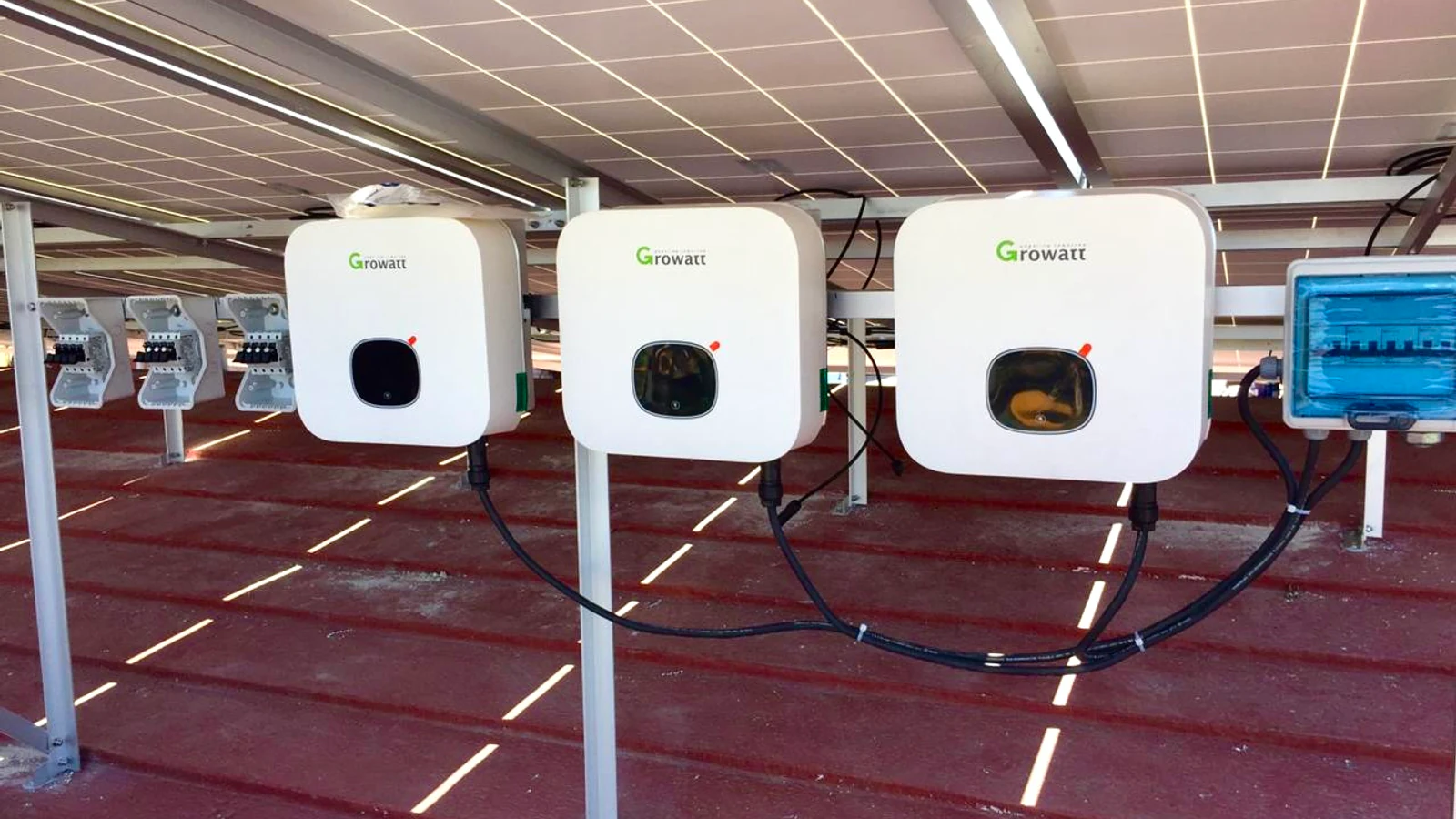

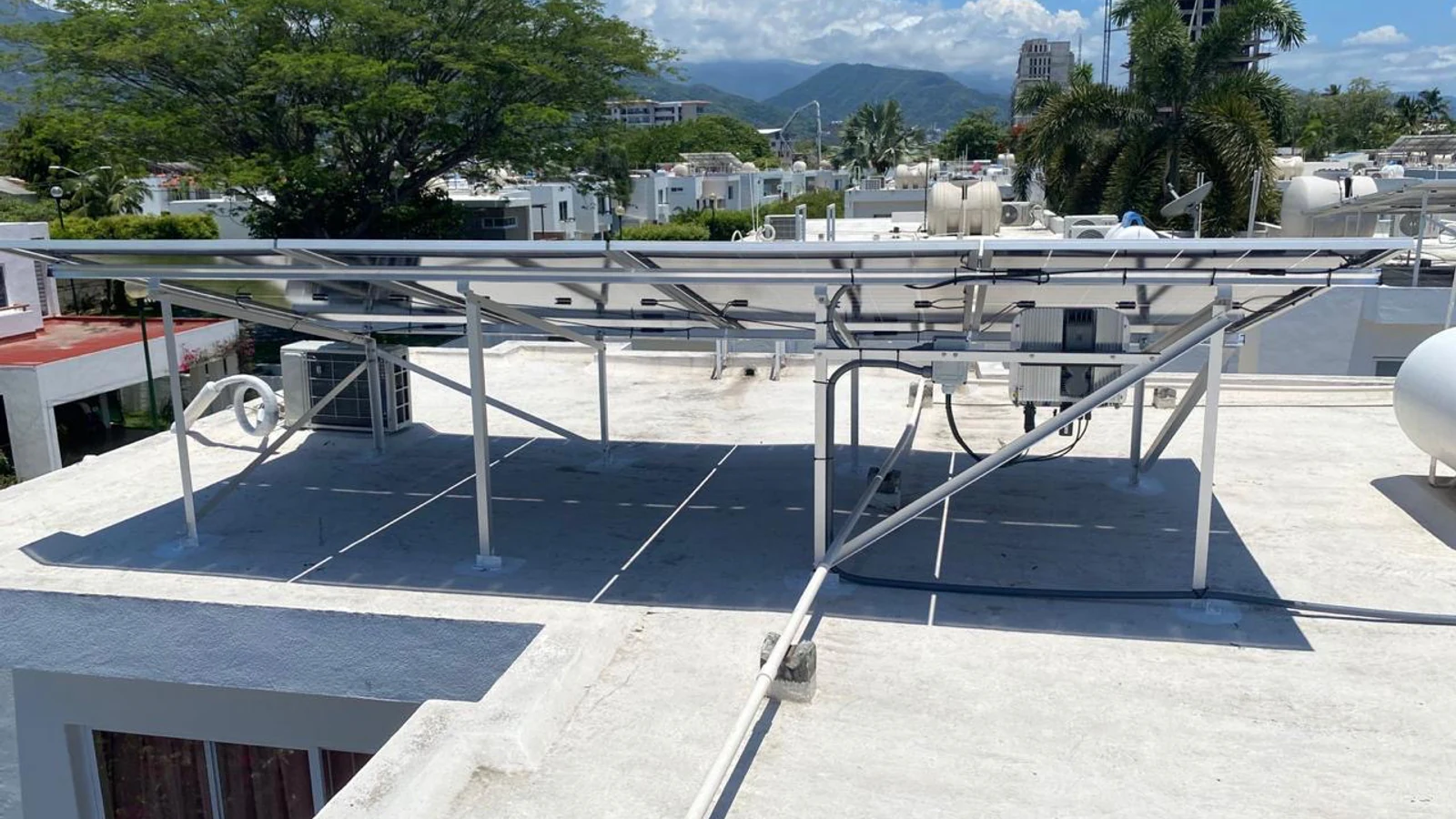
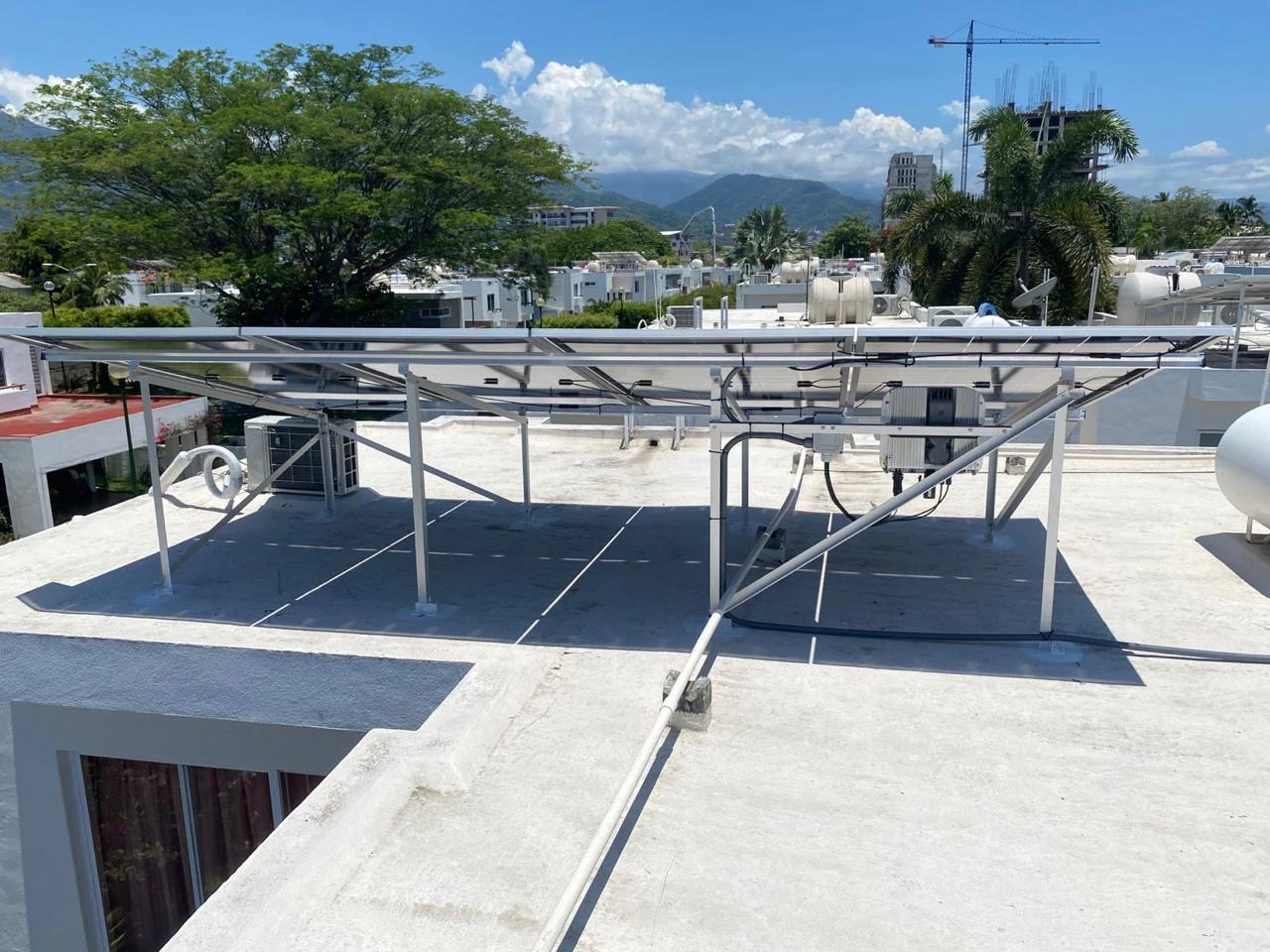
The mounting structure secures modules to a roof, the ground, or a canopy and maintains the geometry defined by the design. Although it does not generate electricity, it is essential to installation safety, ventilation, orientation, and durability.
What materials are used?
Anodized aluminum profiles are common in residential and commercial installations because they are lightweight and corrosion resistant. Galvanized steel may also be used for larger structures. Fasteners and attachment hardware are selected for the installation environment.
Main components
- Rails: the main profiles that support and align the modules.
- Clamps: components that secure each panel frame to the rails.
- Triangles or supports: establish the tilt defined by the design.
- Anchors: transfer structural loads to the roof, canopy, or ground.
- Fasteners and joints: hold the assembly together and make installation possible.
Why does mounting require technical design?
The mounting system must account for surface type and condition, wind loads, module spacing and ventilation, drainage, corrosion, and the sealing of penetrations. A solution designed for a concrete roof may not be appropriate for metal roofing or tile.