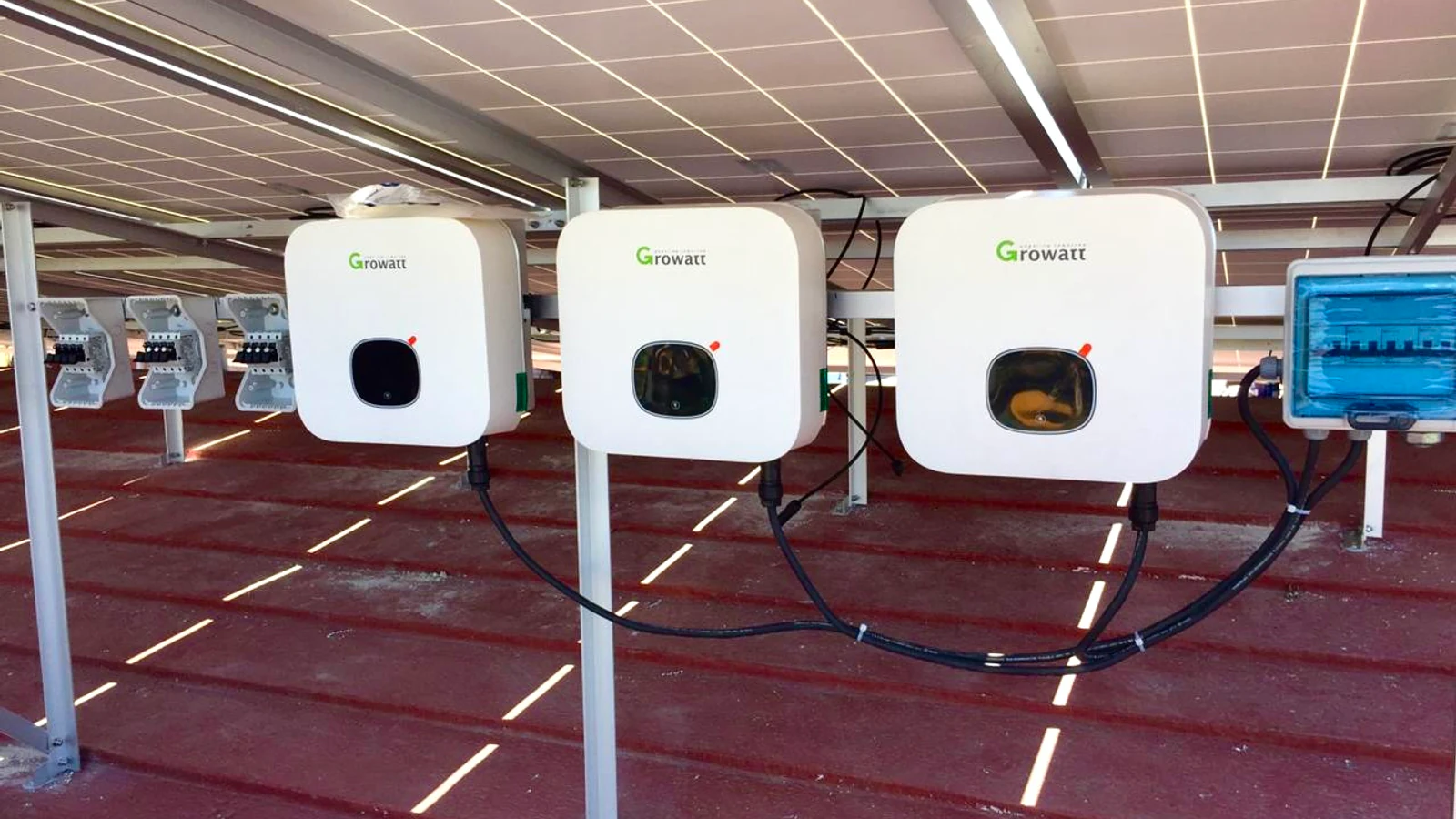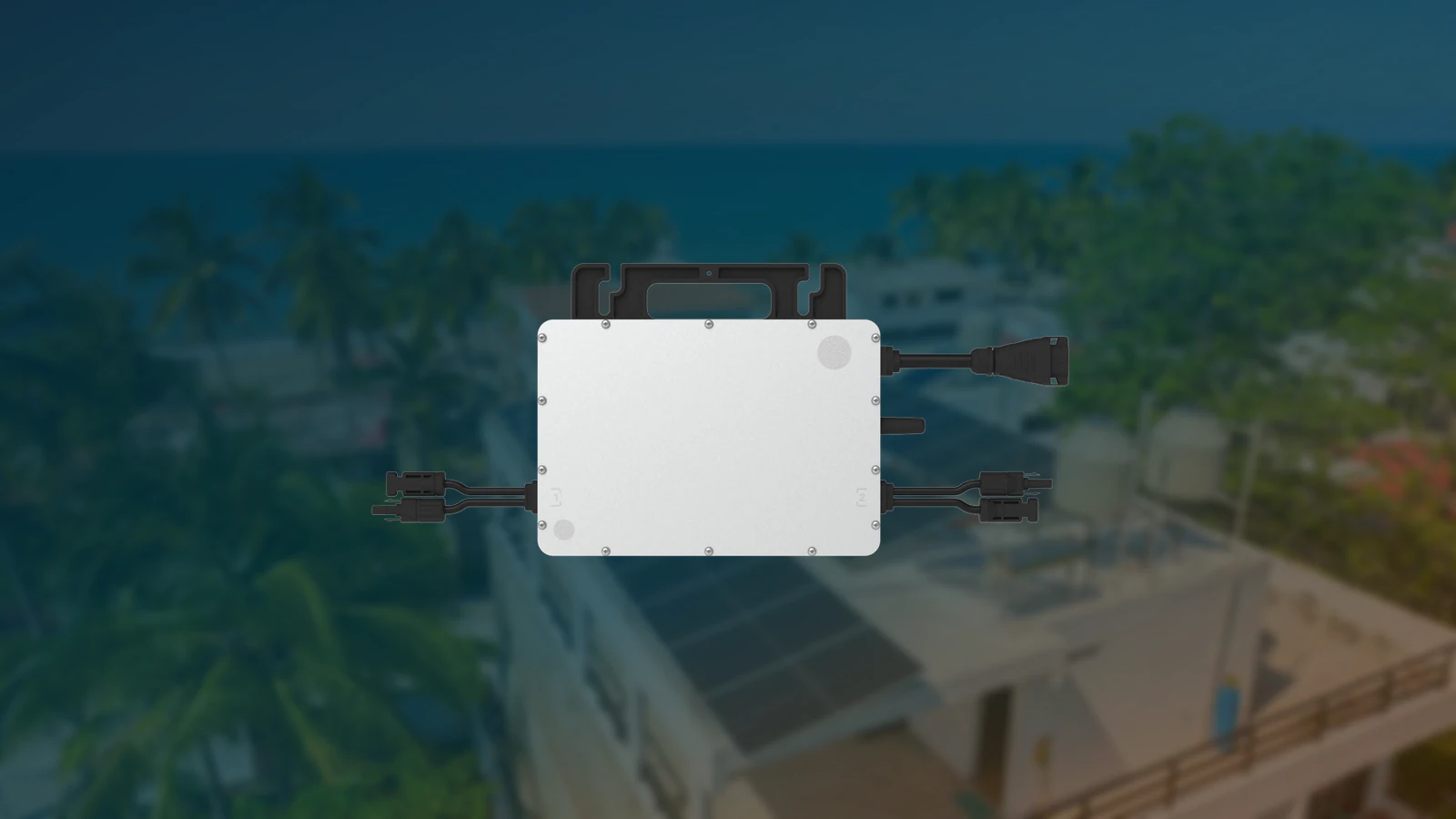


A photovoltaic solar panel—also called a module—combines many semiconductor cells and protects them inside a structure designed for outdoor operation. Its purpose is to convert solar radiation into direct-current electricity.
How does a solar panel work?
-
Capture
Solar radiation reaches the photovoltaic cells inside the module.
-
Conversion
Light energy moves electrons through the semiconductor material and generates direct current through the photovoltaic effect.
-
Use
The inverter converts that electricity into alternating current for use at the property or exchange with the grid, depending on the system type.
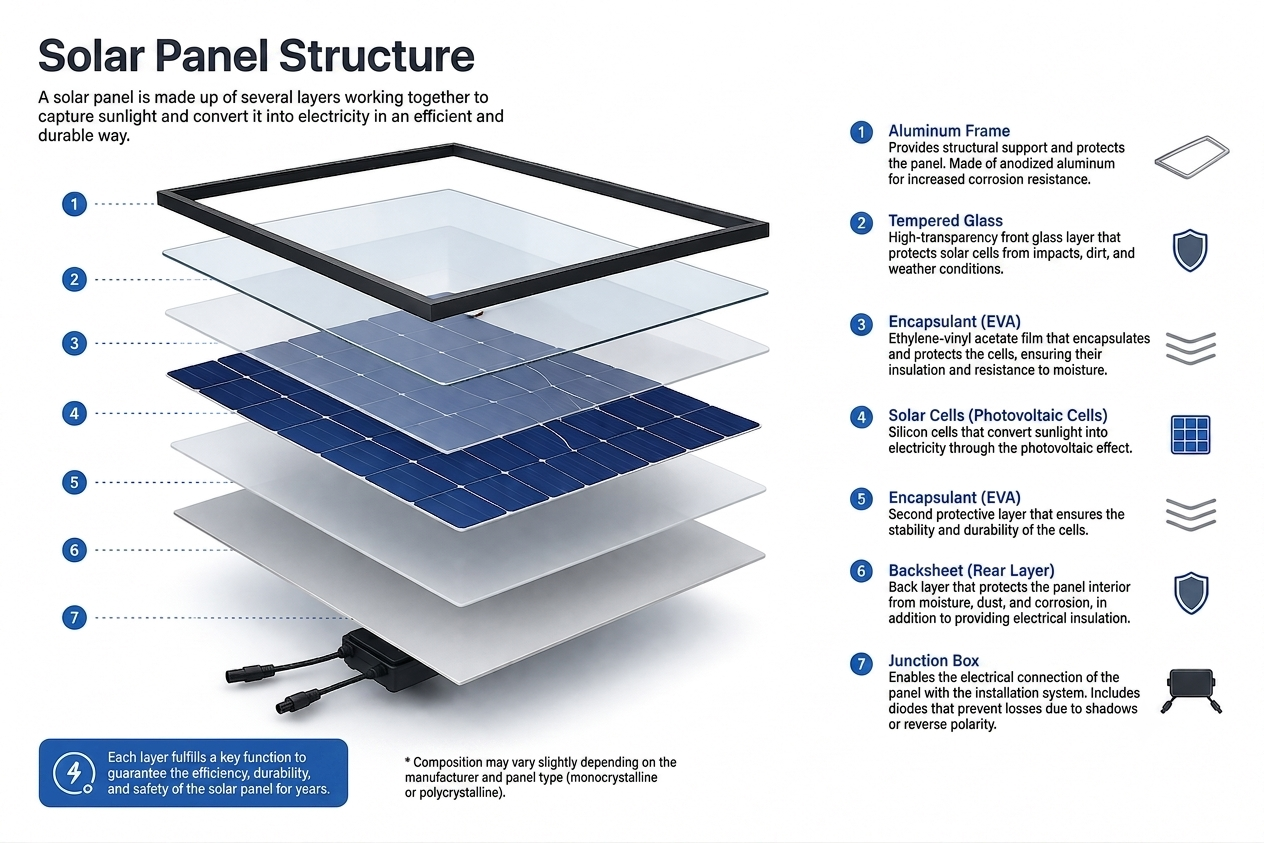
What components are inside a solar panel?
- Aluminum frame: provides rigidity and supports module installation.
- Tempered glass: protects the cells from impacts and outdoor conditions.
- Encapsulants: insulate and hold the cells in place inside the module.
- Photovoltaic cells: convert solar radiation into electricity.
- Backsheet: provides insulation and protection on the rear side.
- Junction box, cables, and connectors: carry energy out of the module and connect it to others.