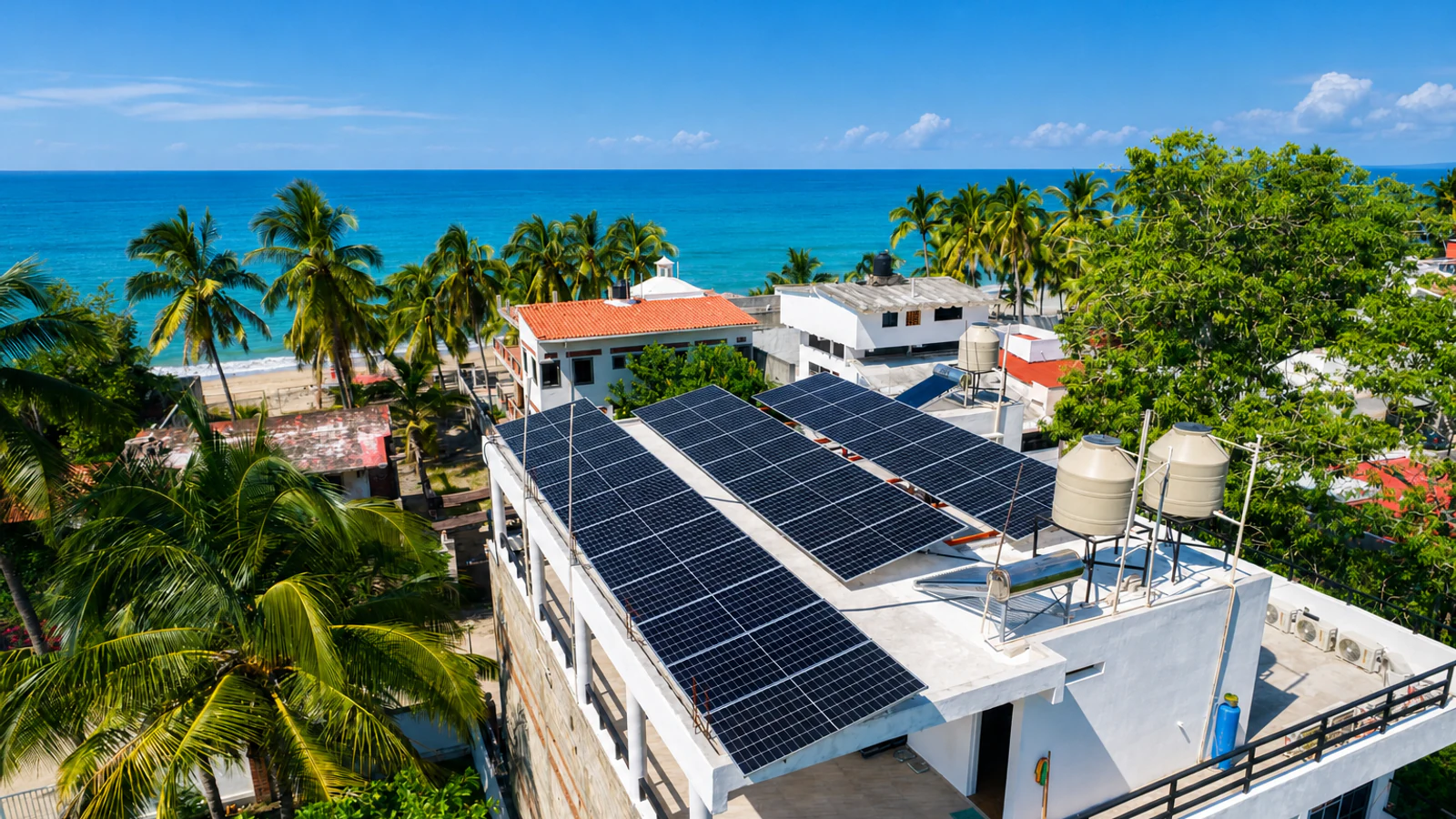

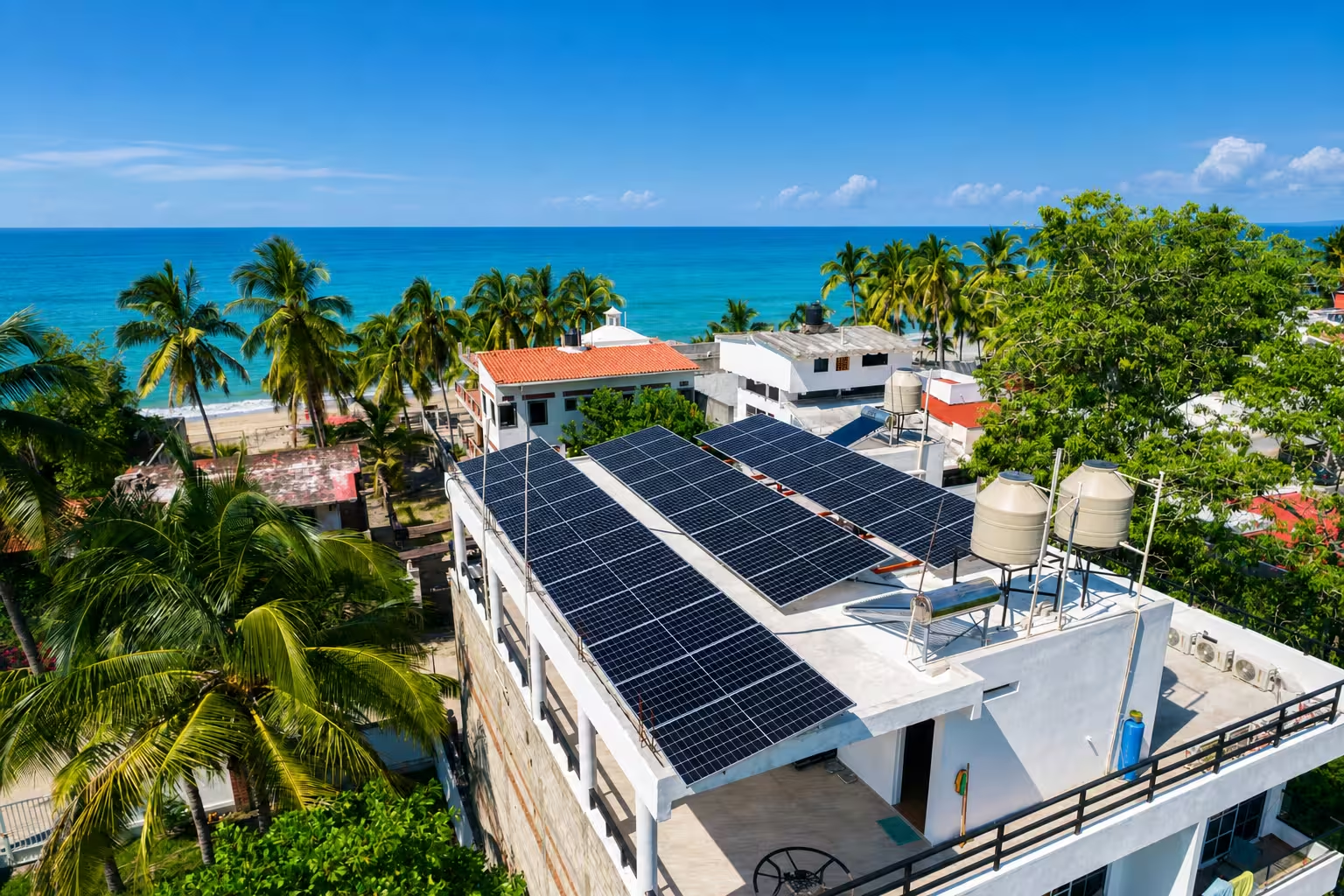
Photovoltaic cells are the essential component inside a solar panel. They turn sunlight directly into usable electricity without combustion, noise, or moving parts.
From sunlight to electricity
A cell is made from semiconductor materials, usually silicon. When photons reach its surface, they release electrons and create direct current. Multiple connected cells form a solar module or panel.
What completes a photovoltaic system?
- Solar panels that capture radiation.
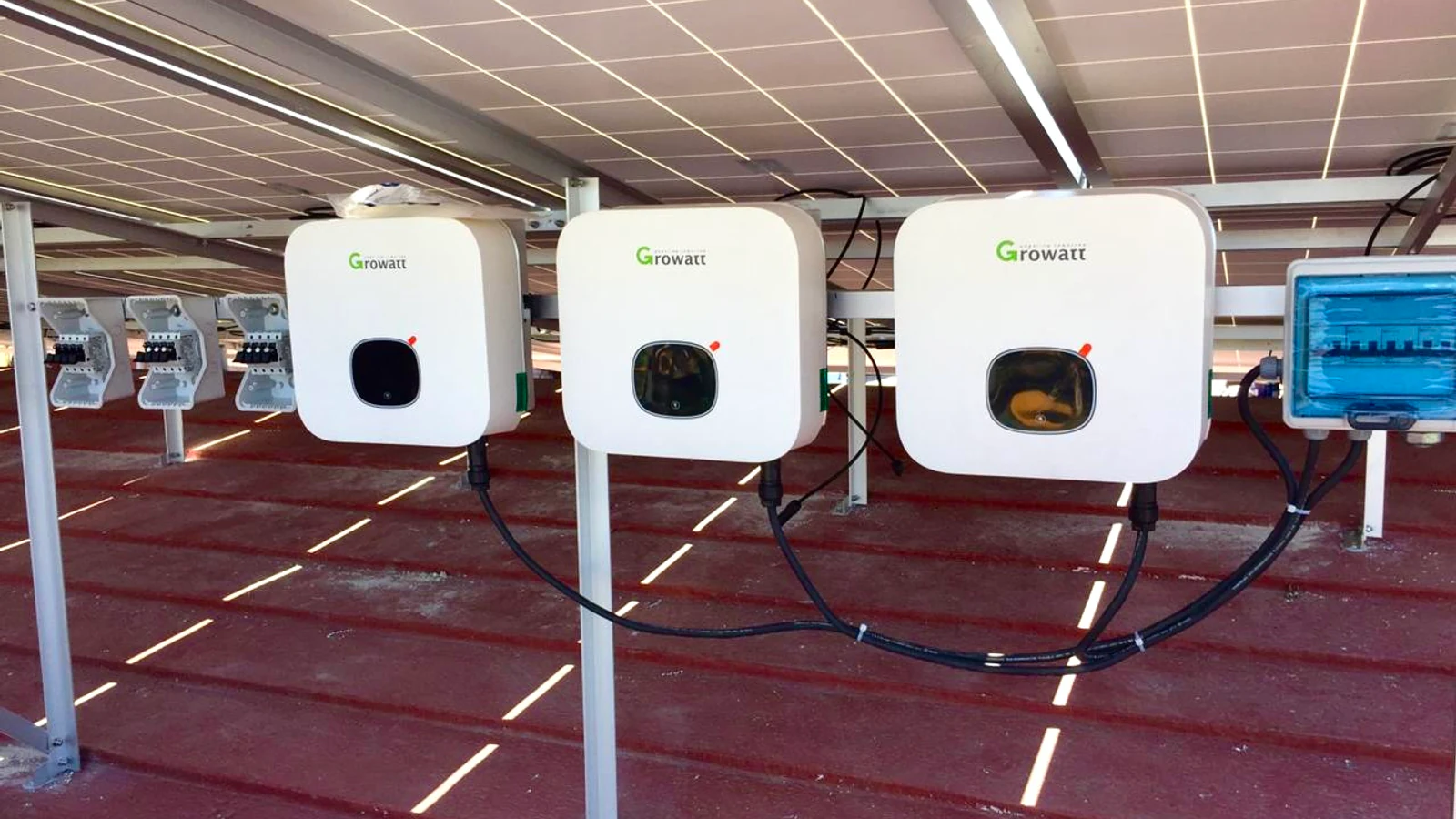
- An inverter that adapts electricity for everyday use.
- Specialized mounting, protection, and wiring.
- A bidirectional meter for CFE grid-tied systems.
- Monitoring to track production and identify changes.
Do they work on cloudy days?
Yes. Cells also use diffuse light, although production is lower than on a clear day. A professional design therefore uses annual irradiation data and considers orientation, shade, temperature, and consumption.
Technology designed to last
A properly designed system can generate energy for decades. Component quality, correct installation, and continuous monitoring determine whether it delivers the projected savings.