
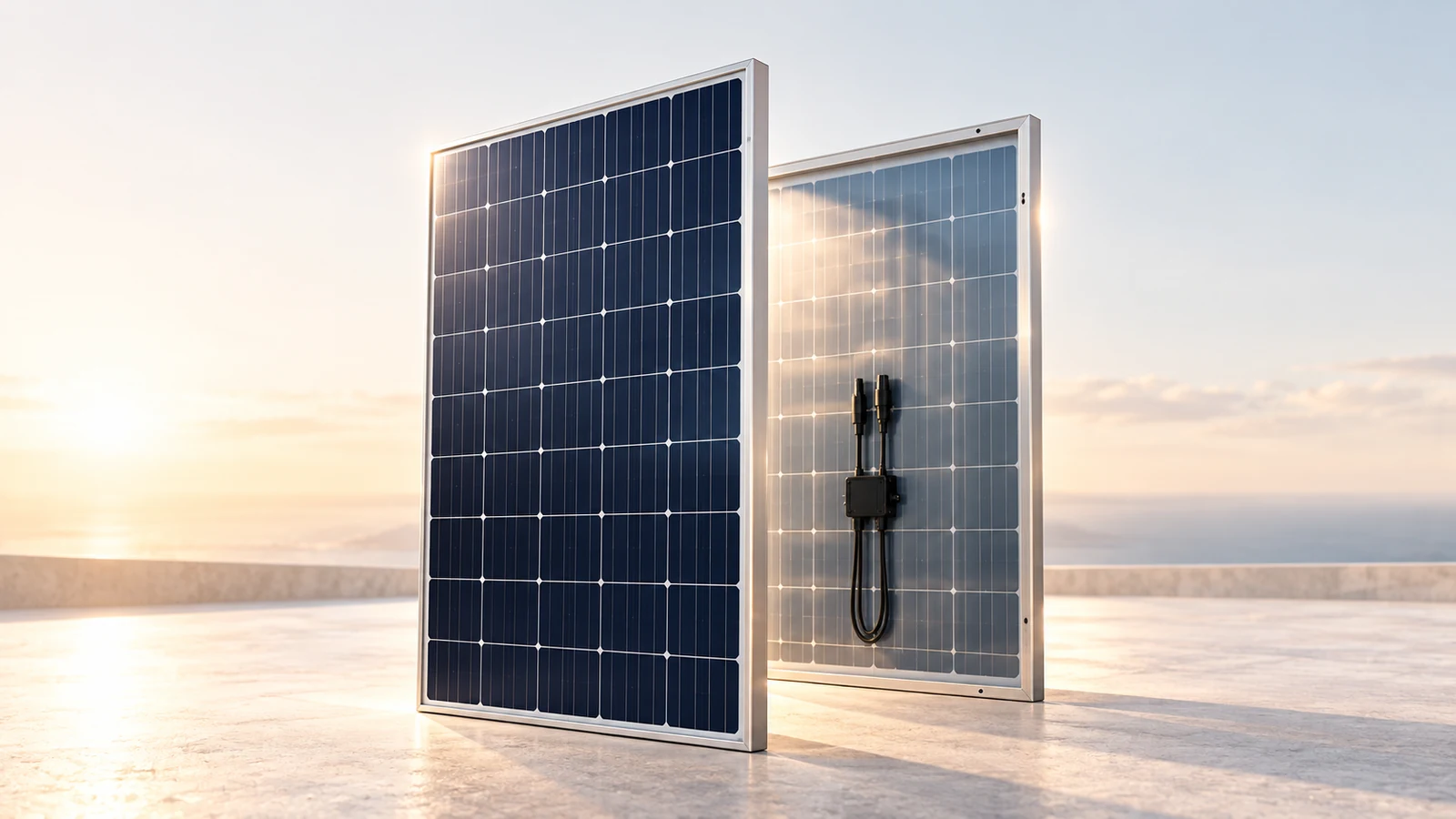
A bifacial solar panel can generate electricity from light reaching both its front and rear surfaces. That second active side creates an opportunity to capture more of the available sunlight, provided the installation allows light to reach it.
Two sides to capture sunlight
The front receives direct and diffuse light. The rear can also use sunlight reflected by the ground, roof and surrounding surfaces, along with some diffuse light from the environment. A surface’s ability to reflect light is called albedo: light-colored surfaces generally reflect more than dark ones.
Bifacial does not mean double the output. The rear usually receives less sunlight than the front, and its contribution varies with mounting height, tilt, shading, row spacing and the surface below the panels.
Inside a bifacial module
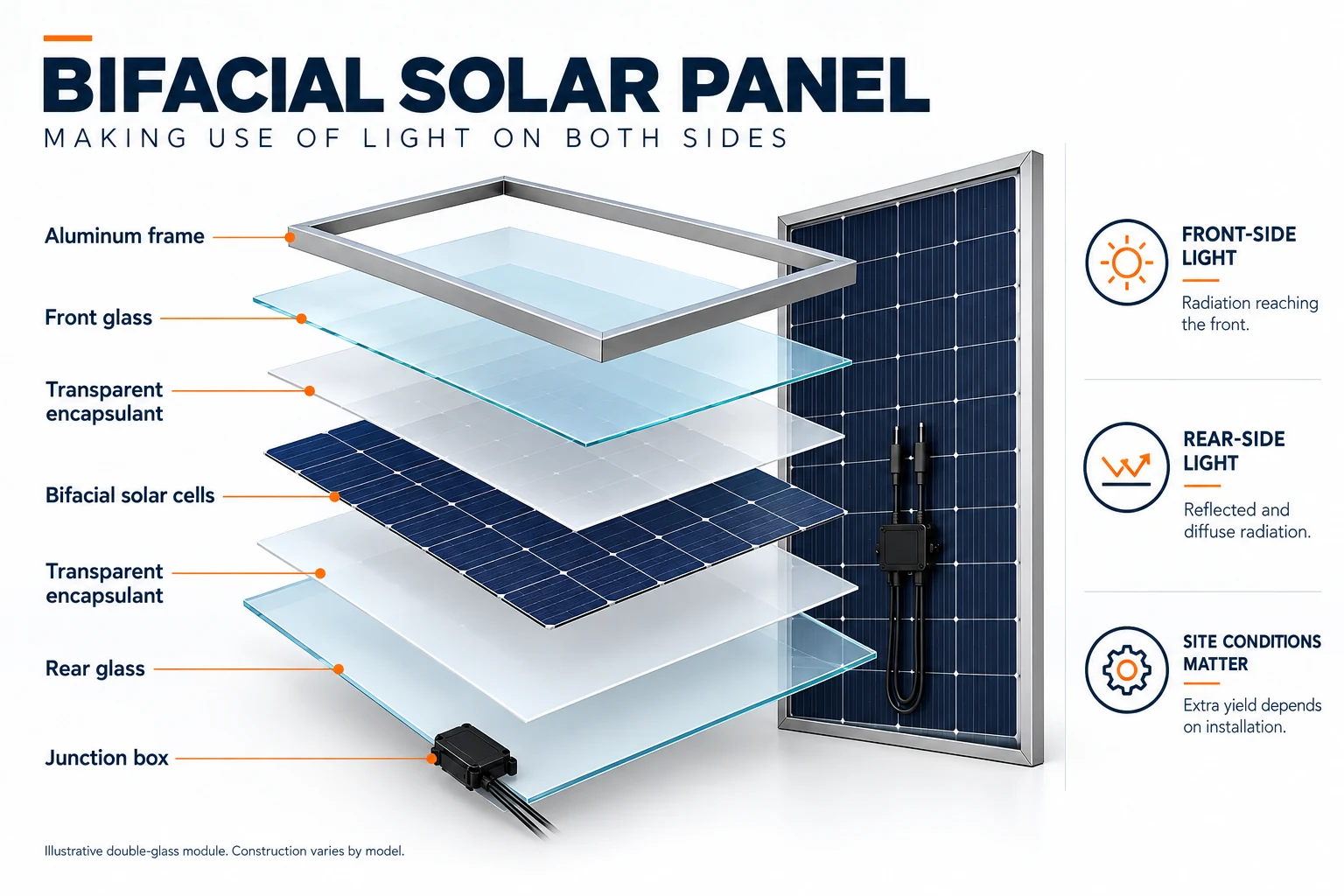
Many models use double-glass construction, with cells protected by transparent encapsulants between two sheets of glass. Other designs use a transparent backsheet. Check the specific module’s data sheet to understand its construction; bifacial panels do not all share the same design.
Explore how reflected light changes
Choose a surface in the diagram. The animated rays show how greater reflectivity can make more light available to the rear of the panel. The albedo percentages are teaching examples; this diagram does not calculate a system’s energy output.
The surface matters, too
Change the ground surface to explore the light reaching the back of the panel.
The dark surface absorbs much of the incoming light, leaving less reflected radiation available to the rear of the panel.
Teaching example, not an energy-yield simulation. Albedo values are illustrative assumptions and vary with materials, dirt and moisture. Actual bifacial gain also depends on geometry, shading and module specifications.
Efficiency, bifaciality and bifacial gain are different
-
Front-side efficiency
The proportion of light energy reaching the front that is converted into electricity under test conditions. A record set by an individual solar cell is not the same as the efficiency of a complete panel.
-
Bifaciality factor
Compares rear-side and front-side performance under equivalent irradiance. An 80% bifaciality factor, for example, does not mean 80% more energy on your roof.
-
Bifacial gain
The additional contribution obtained from the rear surface. Estimating it requires an assessment of the site and a system model; a brochure percentage does not guarantee a home’s annual energy yield.
When bifacial panels may suit a property in the bay
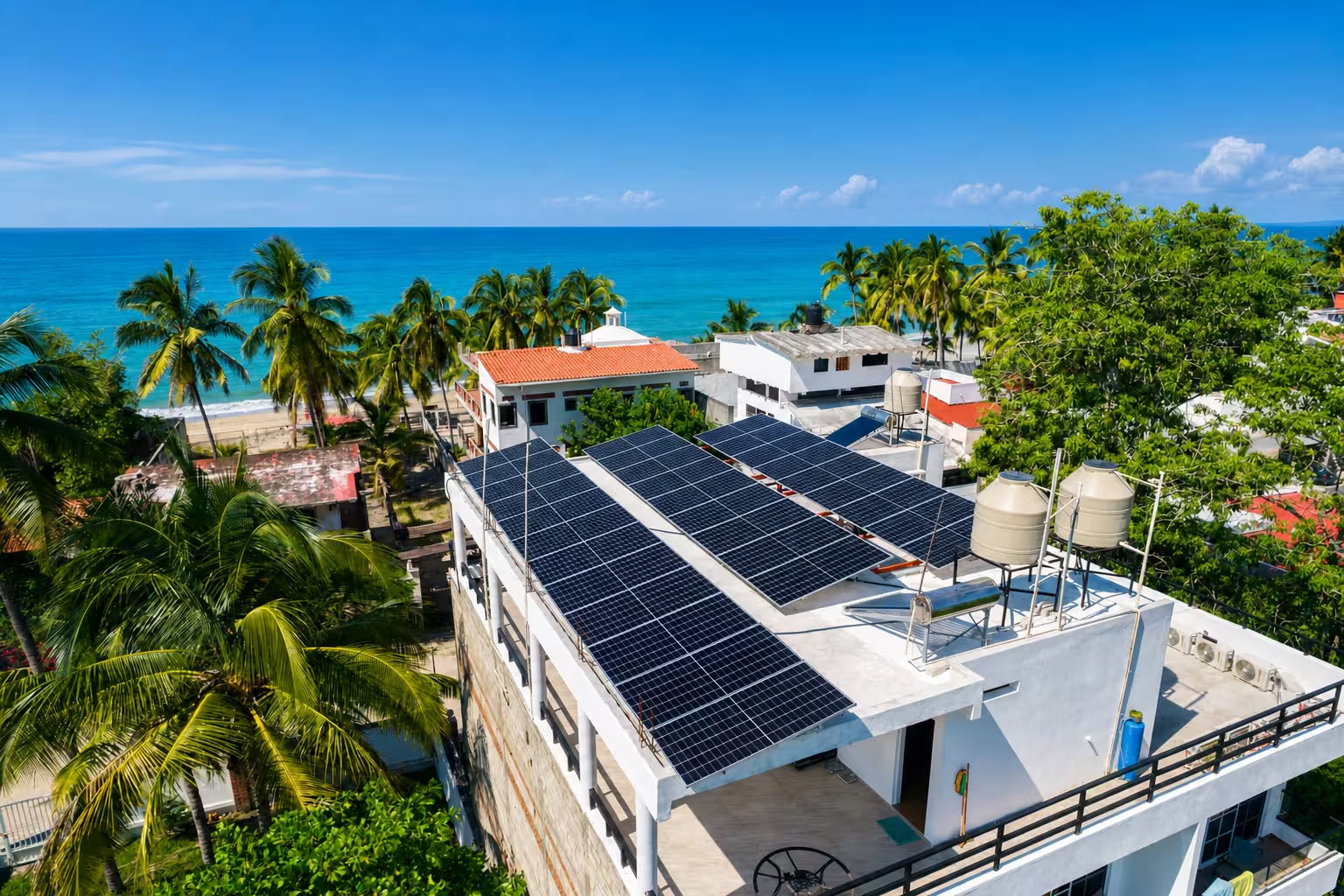
In Puerto Vallarta and Bahía de Banderas, bifacial technology is worth evaluating when the design allows adequate clearance above the roof and exposes the rear surface to useful light. A light-colored roof finish may help, but its cleanliness, aging and shadows cast by the mounting structure also matter.
- Surface: assess its actual reflectivity and how dirt or moisture may change it.
- Mounting: consider height, tilt, row spacing and shading on the back of the panels.
- Structure: verify loads, anchors and compatibility with module weight and dimensions.
- Coastal exposure: review materials, applicable certifications and warranty conditions for the site.
- Total cost: weigh the expected extra energy against module, mounting and maintenance costs.
Durability and warranties are model-specific
Double-glass construction and cell technologies such as TOPCon or HJT can be part of designs aimed at improving performance and durability. Degradation rates and warranty terms still depend on the manufacturer and model. A 30-year power warranty is not the same as a 30-year product warranty, nor does it promise an identical service life for every component.
At Bahía Solar, we review your electricity use, roof conditions and mounting options to compare suitable solutions. That helps us determine whether bifacial panels offer a practical advantage for your project.